

Greater transparency and accountability in infrastructure reduce waste, mismanagement and corruption, and produce better quality roads, bridges, schools and hospitals that the public can use. More citizens can access essential rights and services. Governments see better value in public budgets, businesses enjoy a level playing field, and there are more opportunities for investment.
The infrastructure transparency initiative is built on a tripartite partnership between Government, Private Sector and Civil Society Organizations aimed at initiating and advocating for reforms in addressing challenges that confront public infrastructure delivery. CoST is built on four core features: Disclosure, Assurance, Multi-Stakeholder Working and Social Accountability. Pivotal to these core features is an appreciation of the need for transparency in the delivery of infrastructure in the public sector.
Disclosure, assurance, multi-stakeholder working and social accountability: a global standard for enhancing infrastructure transparency and accountability.
The disclosure process ensures that information about the purpose, scope, costs and execution of infrastructure projects is open and accessible to the public, disclosed in a timely manner by procuring entities in accordance with the CoST Infrastructure Data Standard. The CoST IDS requires 40 data points to be disclosed at key stages of a project's cycle: identification, preparation, procurement, implementation and completion.
See disclosed projectsEnhancing transparency and accountability involves working with stakeholder groups of different perspectives and backgrounds: government, private sector and civil society. CoST brings these stakeholders together through multi-stakeholder groups that guide delivery and provide a neutral forum to pursue infrastructure transparency together.
Meet the MSGAccountability is promoted through the CoST assurance process: an independent review of disclosed data by assurance teams who identify key issues of concern against the CoST IDS and put technical jargon into plain language, so stakeholders can easily understand the issues and hold decision-makers to account.
Read assurance reportsStakeholders such as the media and civil society play an important role in holding decision makers to account. CoST works with them to promote the findings from its assurance process and take issues into the public domain, so civil society, the media and citizens can all be aware and act.
Follow the coverageTo enable a multi-stakeholder approach in the disclosure, validation and use of infrastructure data, contributing to quality infrastructure that meets people's needs.
Quality infrastructure, stronger economies and better lives.
As CoST expands around the world, many countries are realising its full impact, felt on lives, money, efficiency and accountability.
CoST works internationally with key anti-corruption organisations to exchange experience and knowledge on transparency in public infrastructure.
Building confidence in the bidding processes; creating a fair, open and competitive environment for private contractors.
In addition to promoting transparency, CoST helps increase the flow of direct overseas investment into a country's infrastructure sector.
Better value for community: ensuring cost-effective delivery of improved infrastructure that improves communities and lives.
Access to reliable, detailed and easy-to-understand infrastructure project information.
Supporting governments to put systems in place that allow the public to access reliable infrastructure project information.
Helping multi-stakeholder groups oversee the validation and interpretation of infrastructure data so citizens can understand it.
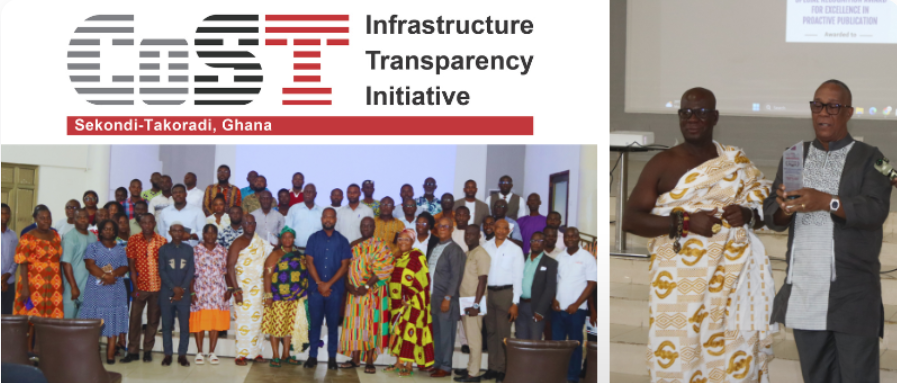
The Infrastructure Transparency Initiative (CoST) Sekondi-Takoradi chapter held a stakeholder dissemination event for it...
Read the story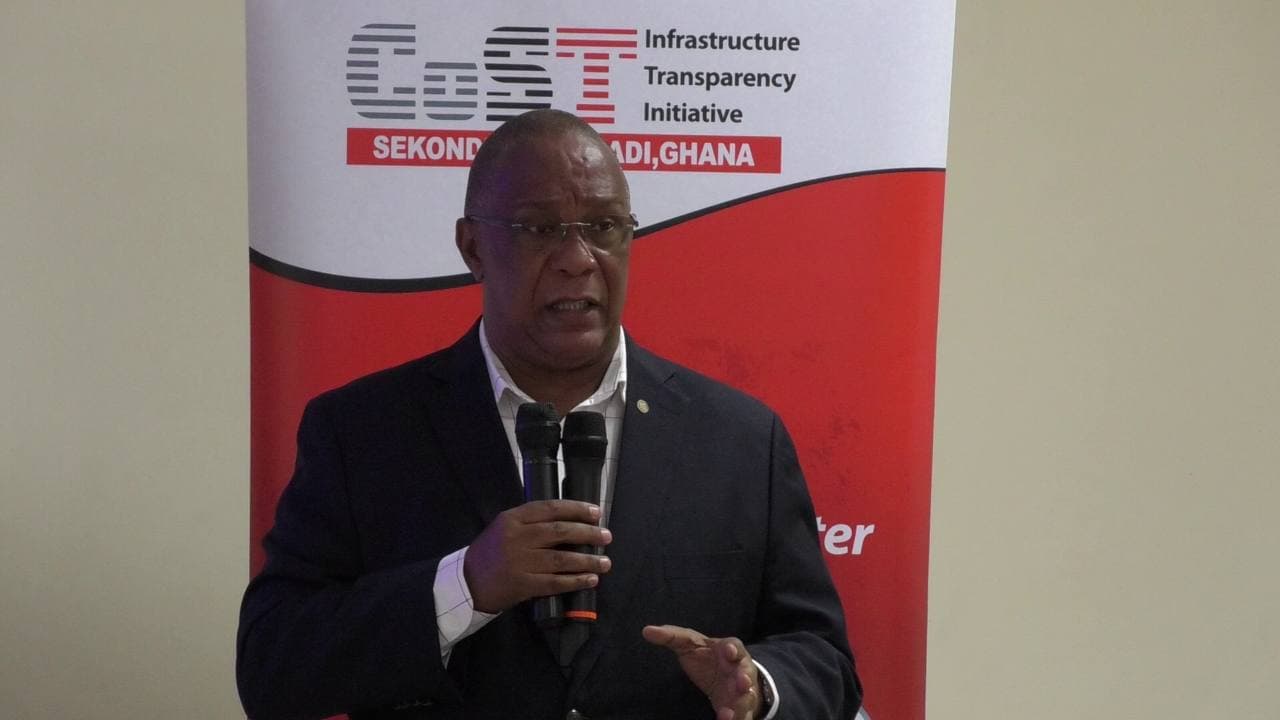
"It has long been established that the infrastructure sector is the engine of growth of any economy. This is because almost every socio-economic activity requires some form of infrastructure facilities, such as schools, hospitals, markets, roads and bridges, to engender projected economic development."
"Public investment in economic and social infrastructure ultimately leads to great benefit for society: improved economic opportunities, increased employment and competitiveness, improved productivity, and reduction in poverty and inequity."